What is sleep hygiene?
Sleep hygiene is what sleep experts and doctors use as an umbrella term for lots of different lifestyle habits and daily routines that give you a better chance of sleeping well.
Despite having the word ‘hygiene’ in the name, it’s not really about cleanliness. Having said that, I quite like to have an evening shower to wash away the day’s sweat and cool my body in warm weather.
The way I usually explain sleep hygiene is that it’s all about paying attention to three key areas of your life that can affect your sleep:
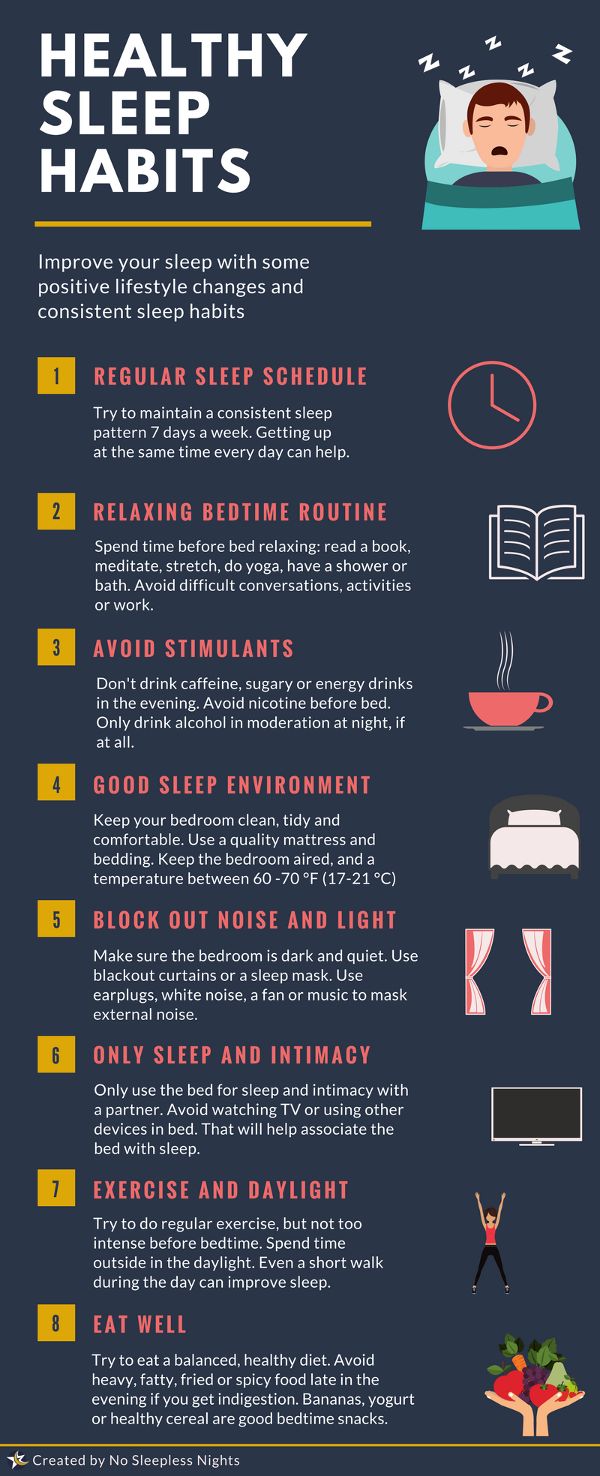
Lifestyle choices, such as diet, exercise, and even how you handle stress. The way you set up your bed and bedroom. Your daily and nightly routines.In the infographic below, you can see some of the healthy sleep habits to consider if you don’t have time to read the whole article.
Can sleep hygiene help you sleep better?
In my experience, sleep hygiene can be effective, but you might need to experiment with more than one habit to reap the rewards.
In some ways, it’s like a jigsaw puzzle, with many different pieces of advice to consider. When you connect a few pieces that are relevant to you personally, you’ll hopefully have enough to see the picture of a good night’s sleep.
An important point to keep in mind is that everybody is different. As you read through this article, you might recognise one or two areas you could optimise. Don’t stress about lining up every single sleeping duck.
This isn’t a rigid set of sleep rules that you must obey or else the doom and gloom of insomnia will surely descend upon you. You may find that just one or two key tweaks makes a big difference.
You might also find you already do some of them, which is great. If there are others that you don’t currently do, perhaps try them out for a few weeks to see if they help you sleep better.
1. Stick to a regular sleep schedule
Our bodies and minds seem to like routine, and it’s no different when it comes to sleep. In the ideal world, we’d go to bed and wake up at the same time every day. I hear you though – it’s easier said than done!
Some people struggle to fall asleep at roughly the same time every night, no matter how hard they try. It can be stressful and frustrating going to bed at 10 p.m. because you’ve calculated that gives you just enough time to sleep, but then you end up lying awake for ages.
One technique that might help is to be very consistent about the time you set your alarm in the morning. It’s easier to control the time an alarm wakes you than the time your mind finally decides to stop thinking and go to sleep.
For me personally, waking up at the same time every day has been one of the keys to improving my sleep overall. I find that having that stability in the morning helps increase the chance of stability in the nighttime too.
I also tend to sleep better in general if I continue to get out of bed reasonably early on weekends. However, I can understand that social activities and the need to catch up on some sleep might not make the idea of getting up at 7 a.m. on Saturday and Sunday very appealing.
If you can resist the temptation to spend lazy weekend mornings in bed though, getting up at (more or less) the same time every day of the week might just help your sleep schedule overall.
2. Prioritise sleep
All too often we sacrifice precious sleep time for other activities. Sometimes they are important and that’s understandable. However, we also have a tendency to get stuck on autopilot staring at screens because, well, funny cat videos exist.
If you regularly feel like you don’t get enough sleep though, it’s worth considering how much of a priority your sleep is, and how much time you set aside for it.
Ideally, it should be a non-negotiable time of the day, with just as much importance as eating or working. Obviously, there are situations when you can’t just tell your family that you’re unavailable for the next nine hours, as much as you might wish you could sometimes!
However, once you start to see sleep as important, it might make some of the micro decisions easier, such as “shall I watch another episode or go to bed?”
Go to bed, is probably the correct answer if that question comes to mind. Just don’t then migrate to your phone in bed, giggling at cats. And as much of a contradiction as it sounds, if you’ve gone to bed feeling really stressed or upset, maybe a cheeky few minutes to cheer you up might not be so bad (but you didn’t hear that from me…)
3. Don’t stay in bed if you can’t sleep
You may know from experience that lying awake for hours in the dark, endlessly changing position in the hope that you’ll hit the jackpot of the perfect position to fall asleep, steadily getting more stressed about how you’ll feel the next day, isn’t much fun.
That’s why for some people it sometimes helps to only go to bed when you feel tired rather than at the same time every night. I know this isn’t in line with the advice about having a stable sleep schedule, but it might be one to try if a sleep schedule just isn’t working for you.
It can take up to 30 minutes to fall asleep. If you’re still awake after that time, it might be better to get up for a while, then try to sleep again a bit later. During that time, you could repeat part of the bedtime routine coming up next.
Personally, if I can’t fall asleep, I either make myself a cup of herbal tea, or just turn the light on and read my book for a while.
4. Have a relaxing bedtime routine
Sometimes, the reason we can’t fall asleep is simply an overactive mind. Perhaps you’re in mental fifth gear right up until bedtime and just can’t unwind. Maybe you feel physically relaxed, but when you switch the light off, the worry train seems to start up.
Taking some time before bed to regularly do a calming activity or two can help prepare your mind for sleep. By giving yourself time to relax before you try to sleep, there’s less chance your mind will decide to do all that thinking in bed. This is another key point, so I’ve written an extended article about it:
Discover ideas for a calming bedtime routine
5. Calm your mind with relaxation techniques
Before you go to bed it can help to practise relaxation techniques. You can even do them whilst lying in bed to help you relax and fall asleep. There are several exercises you might like to try:
Deep breathing exercises. Gentle yoga. Progressive muscle relaxation. Guided meditation and visualization recordings. Mindfulness techniques.If you’re the kind of person who struggles with worrying or endlessly thinking in bed, these techniques can be effective because they help shift your mind’s focus away from your worries, plans, and thoughts about the future. Again, this is a big topic, so I’ve written a separate article full of practical relaxation techniques you can try:
Learn some relaxation techniques
6. Make your bedroom a sanctuary for sleep
Your bedroom, bed, and bedding can have a profound effect on your sleep. Take a look at the following ideas and see how many you currently do:
Keep the bedroom tidy, clean, and free from clutter. If there are two of you, make sure you have a large enough bed. Use a mattress and/or mattress topper that has the right level of firmness and support for you. If the bedroom feels stuffy or humid, open a window or use a dehumidifier. Use opaque curtains or blackout blinds to prevent light from coming in. If that’s not possible, use a sleep mask. Don’t let your bedroom get too hot or too cold. When I was looking into the ideal bedroom temperature for sleep, I found that suggestions varied between research studies, with a range of 61°F (16°C) to 73.4°F (23°C) for adults. You’ll also find that medical and sleep websites don’t agree on the temperature either, so it’s somewhat confusing. That’s why I personally stick to the basic rule of thumb of not too hot, not too cold, and not too humid. Just keep it comfortable enough for you to sleep well when you’re under your bedding.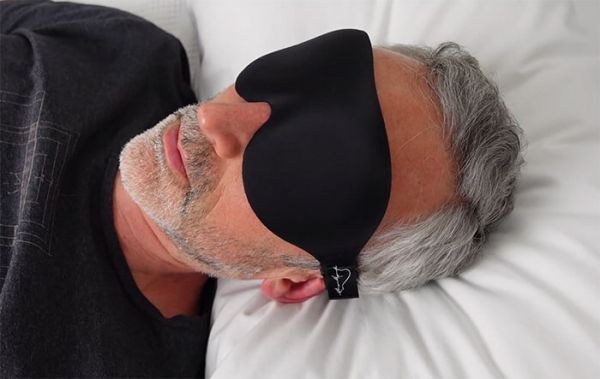
That’s me in the photo above. If you’re a shift worker, or don’t have blackout blinds, there are lots of comfortable sleep masks to choose from.
7. Only use the bedroom for sleep and intimacy
It can help if your brain associates the bedroom with two main activities: sleep and sex. One obvious exception is if you find it relaxing to read a book in bed.
I also understand that this might be difficult if you live in a house share with limited personal space. Even then, you could avoid the bed more if you have a comfy chair, sofa, or beanbag in your bedroom.
I work from home a lot, and try to keep out of the bedroom during the daytime as much as possible. I never watch movies in bed either (even though it’s admittedly cozy to do in the winter!).
Perhaps most importantly, I have a personal rule of never engaging in stressful, difficult, painful, or sad conversations with my partner in bed at night.
For me, it’s very hard to fall asleep straight after an intense conversation because the ideas and emotions tend to linger. It’s much better to have those conversations during the daytime when you’re less tired and have a clearer head anyway.
8. Avoid screen time in bed
It’s often advised to avoid using a phone, tablet, laptop or other electronic screen in bed, for several reasons:
The bright light from the screen might keep some people awake. Working, playing games, or surfing the internet can stimulate your brain and stop you from relaxing. Screen time can be addictive, and trying to beat the next level or spending time on social media can interfere with a carefully planned sleep routine.If you strongly disagree with this point, and feel it’s relaxing to use your smartphone or tablet in bed, then try to limit it to activities that aren’t too stimulating. You can also dim the screen, use the blue light filter or night mode in the main settings.
9. Choose the right mattress
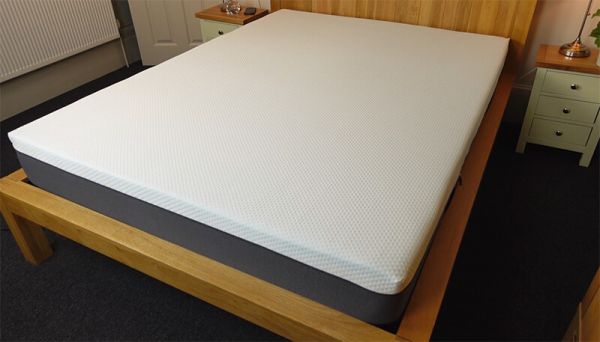
The photo above is of my bedroom and current mattress. My preference is for memory foam as it supports my body well when I sleep on my side.
Your mattress is arguably the most important part of your bed, so it’s essential to have a comfortable and supportive mattress. Here are some key points to bear in mind when choosing one:
Your mattress should be big enough for you and a partner to sleep on, ideally with some room to stretch out and not feel confined to a narrow section. Mattresses tend to need replacing every eight years on average. When lying on your back, you should be able to slide your hand between the mattress and your back. Not too easily and not with too much force. Bed frames with slats are good choices as they allow air to circulate under your mattress.If it’s too expensive to replace your mattress, a great alternative is a mattress topper. A topper can help rejuvenate an older mattress, add some softness, make it firmer, or make it feel cooler/warmer to sleep on.
Find out about the different types of mattress toppers
10. Choose high-quality bedding and pillows
Choose the best quality bedding you can reasonably afford, clean it regularly, and use hypoallergenic fabric if you have allergies.
As well as feeling more comfortable, some fabrics are better at regulating your body temperature:
Cotton – most durable, soft and breathable. A higher thread count (350 or more) means it will be softer. Choose Egyptian, MicroCotton or Pima cotton if possible. Silk – ideal for hot summer nights and those with allergies. Satin – feels nice, but isn’t so breathable. Polyester – typically costs less and can feel soft, but might also feel more artificial.11. Make sure your bedroom is quiet or block out noise
External noise and snoring are common causes of sleeplessness. When it comes to noise, there are essentially two avenues to explore: stopping the noise at the source and reducing how much sound reaches your tired mind.
Here are a few options to try:
If a neighbour or someone in your house is creating the noise, speak to them about it honestly and calmly. Don’t just put up with it if it’s driving you crazy, but don’t start a sound war either. Like all wars, you’ll both suffer. If you can’t stop the noise at the source, try using earplugs, headphones, a white noise machine, or a fan. Use heavy curtains by an external window or consider getting double glazing. Put more furniture or other furnishings by a shared wall to soak up some sound.A bedroom should be a little like a cave: cool, dark, and quiet. But I appreciate that cutting out loud noise from the outside world (or a partner’s jet engine snoring) isn’t always so easy.
If this is a serious, ongoing problem for you, you might also find it helpful to read my longer article about noise in the bedroom:
See my tips for blocking out noise in bed
12. Avoid caffeine and energy drinks
Some people can drink an espresso after dinner and still fall asleep as instantly as an instant coffee.
Seriously, how do they do that?!
For the rest of us mere mortals with higher caffeine sensitivity, an espresso martini probably isn’t the best choice of evening drink.
If you’re sensitive to stimulants, you might want to avoid these drinks in the afternoon too, as caffeine can stay in your body for a long time:
Coffee. Black tea. Green tea, as it does contain caffeine. Coca-Cola, Pepsi, and other colas. Energy and sports drinks such as Red Bull. Sugary drinks.If you enjoy having hot drink at night, either warm milk or a herbal tea could form a part of your bedtime routine. You can find many sleep teas in stores, supermarkets and online nowadays.
13. Cut out the nightcap
Some people believe that alcohol helps them fall asleep faster, and researchers have also shown that to be possible, such as in this study review in 2013.
However, researchers have also shown, such as in a study in Finland in 2018, that alcohol can affect the quality of your sleep in ways you might not notice, which results in you feeling less refreshed the next day.
Other studies, such as in 2015 and 2020, have found a correlation between worse sleep quality and excessive alcohol consumption.
So if you do choose to drink alcohol in the evening, perhaps try to limit the amount you consume.
14. Stay hydrated
Researchers in 2013 found that drinking enough water during the day was associated with better sleep.
There are differing opinions about exactly how much water is sufficient, and it depends on factors such as your age, size, and activity levels.
The NHS in the United Kingdom has this recommendation:
6 to 8 cups or glasses of fluid a day. Water, lower-fat milk and sugar-free drinks, including tea and coffee, all count.
NHS websiteAnd in 2010, the the European Food Safety Authority (EFSA) issued a report suggesting a daily intake of 2 litres of fluids for women and 2.5 litres for men.
I also recommend keeping a glass or bottle of water by your bed in case you wake up feeling thirsty. And when I wake up in the morning, the first thing I like to do is have a good drink of water to rehydrate my body after the night’s sleep.
15. Take stock of your late night meals and snacks
Your diet might be having more of an impact on your sleep than you realise.
Here are some points to consider when it comes to food and sleep:
Try eating your biggest meal of the day for breakfast or lunch if your dinner time is usually quite late. If you can’t, eat dinner earlier in the evening if possible. The important thing is not to eat a very heavy meal late late in the evening. Avoid sugary food before bed, especially chocolate as it may contain caffeine. Avoid spicy, unhealthy fats, or fried food before bed. Avoid food with lots of processed carbohydrates at night. If you eat pasta, for example, eat wholewheat pasta.My personal rule of thumb is that if my choice of dinner leaves me feeling bloated, it probably wasn’t the best choice. That’s also the reason I try to avoid excessive snacking late at night, as much as I love crunching my way through a giant bowl of popcorn while watching a good movie.
17. Regular exercise
Tiring both your brain and your body out during the day may naturally help you sleep better. It makes logical sense really: if you’re tired, you’re more likely to fall asleep.
A poll by the National Sleep Foundation found that 83% of adults who did vigorous exercise during the day had fairly or very good sleep. In comparison, just 56% who didn’t do any exercise slept well.
Not only does exercise naturally tire you out, but it can also help with stress, anxiety and depression. So by helping you relax and deal with mental turmoil, it’s helping you unwind and sleep better.
This is another of the factors which makes the biggest difference for me personally. I’m certain I sleep better on days I do exercise, especially compared to a lazy Sunday bingeing on the latest Netflix series.
18. Spend time in daylight
Even if you can’t get out to do some exercise, it’s a good idea to go for a walk or just sit outside in the daylight for a while. Sunlight helps keep your body clock ticking over nicely, and is good for mental well-being. Ideally, try to spend some time outdoors in the morning or early afternoon.
19. Quit smoking
Nicotine is a stimulant, and like caffeine, can disrupt the sleep process. An interesting study in 2019 found that ‘evening nicotine use was associated with that night’s lower sleep efficiency’.
At the very least try not to smoke in the hour or two before bedtime. And if you’re a regular smoker, this is another good reason to consider quitting.
Now, I know it’s unlikely you’ll immediately give up smoking based on a couple of paragraphs on a sleep website! If you’ve been thinking of cutting down though, and just needed one more nudge or ‘good reason’, perhaps you could use the sleep point as a catalyst for change.
Your views and suggestions
How many of these sleep hygiene habits do you do now? Are there any you think would help you, or do you have any other suggestions? Let me know in the comments below as I’d love to hear from you.